Balian.dev
St. Paul, MN · remote Book a call

Demos

Interactive 3D demos, live in your browser.

Scrollytelling explainers and simulations, each one a subject I wanted to understand, with the real physics or data underneath. They are the clearest way to see what I would build for you.

All of them are free to use and run on a phone. The science visualization page has what the same work looks like for a museum, a lab, a publisher or a company.

The demos

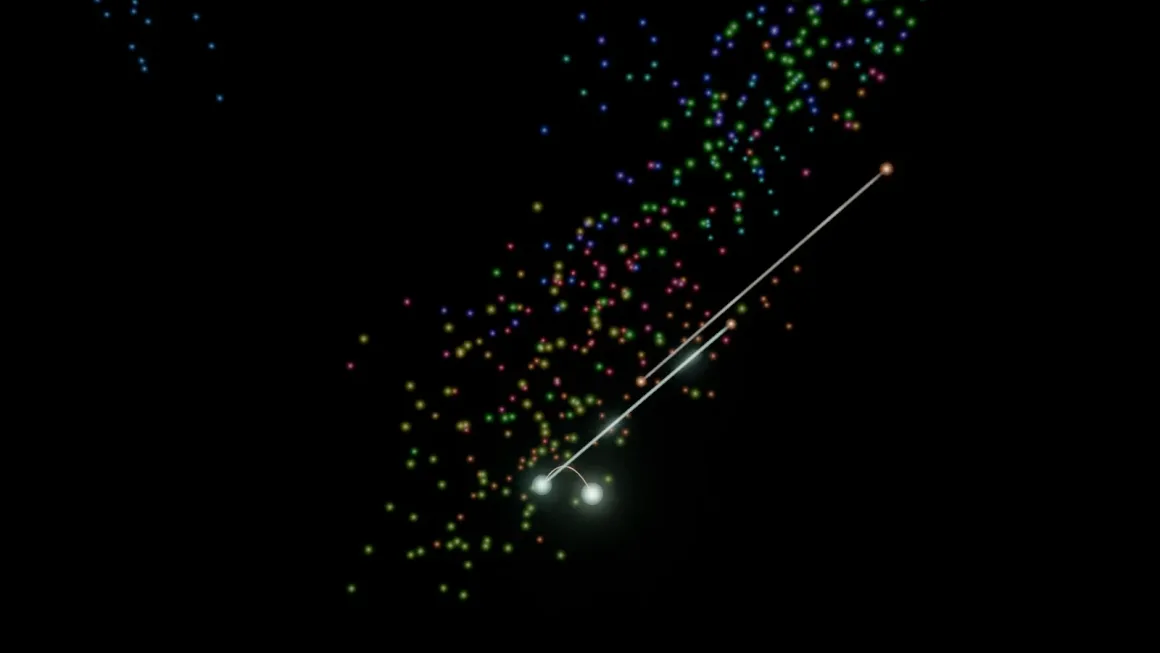
A cloud of colored points for words, with white arrows showing word arithmetic between them

How AI Works

How a language model works, for someone with no background: tokens, a single neuron, learning by nudging weights, meaning as position, attention, training, and what these models cannot do. Every number comes from a real model or a paper, and at the end GPT-2 runs in your browser while you type to it.

Stack Astro, TypeScript, three.js on WebGPU with WebGL2 fallback, GPT-2 in the browser with transformers.js and ONNX Runtime Web, Web Audio, Cloudflare
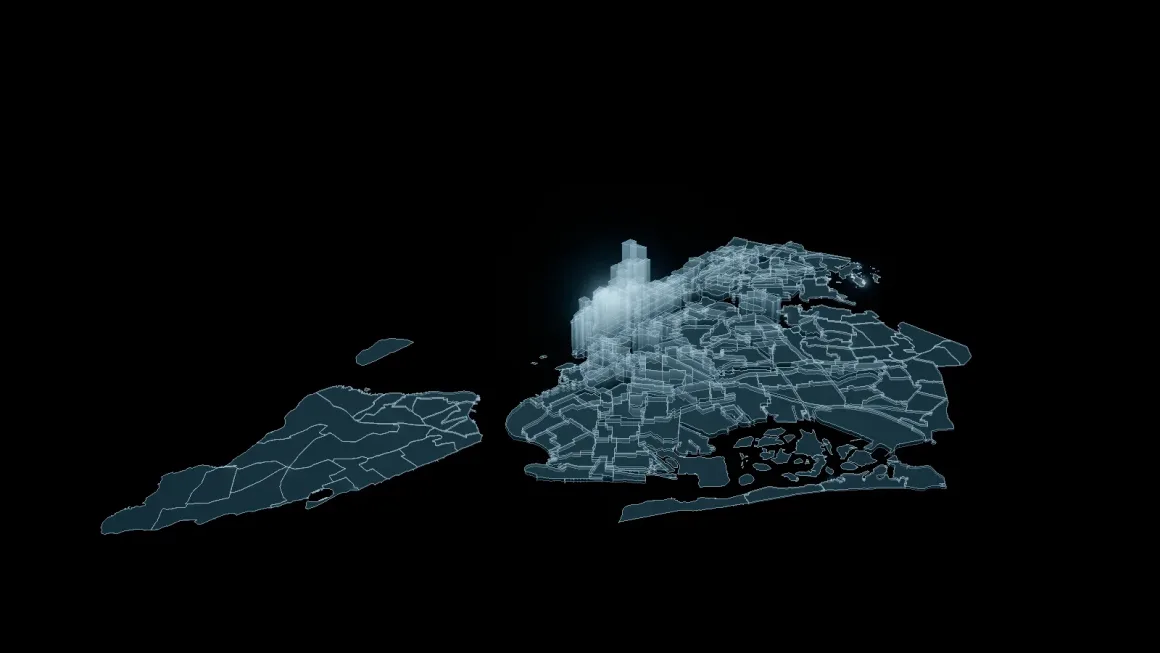
The taxi zones of New York rising as pale blue blocks across Brooklyn, Queens and the Bronx

Hailed

How app rides replaced the New York yellow cab, counted from every trip record the city has published since 2009, 4.4 billion rows. It ends with a live query, where your browser loads a week of real trips and answers questions about them without a server.

Stack Astro, TypeScript, three.js on WebGPU with WebGL2 fallback, Python and DuckDB, DuckDB-WASM, Cloudflare

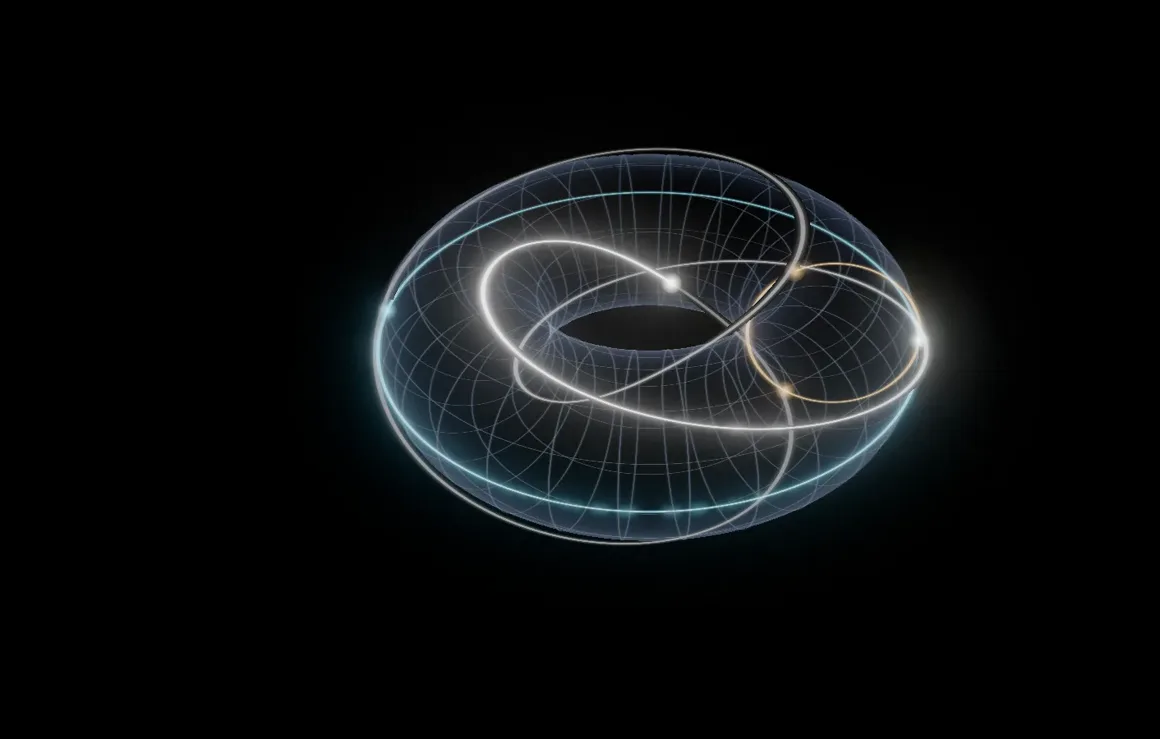
A wireframe torus with a glowing trefoil knot wound around it, a bright bead on the curve and amber and cyan marker rings

Cross Rhythm

Polyrhythm and polymeter, with live sound. Three against two as rings on one axle, gears that share a beat, a ratio drawn as a torus knot, a rhythm sped up until it becomes a chord, the Rhythmicon, Euclidean rhythms and a West African cross-rhythm, ending in an instrument you can play.

Stack Astro, TypeScript, three.js on WebGPU with WebGL2 fallback, Web Audio synthesis with an AudioWorklet, Cloudflare

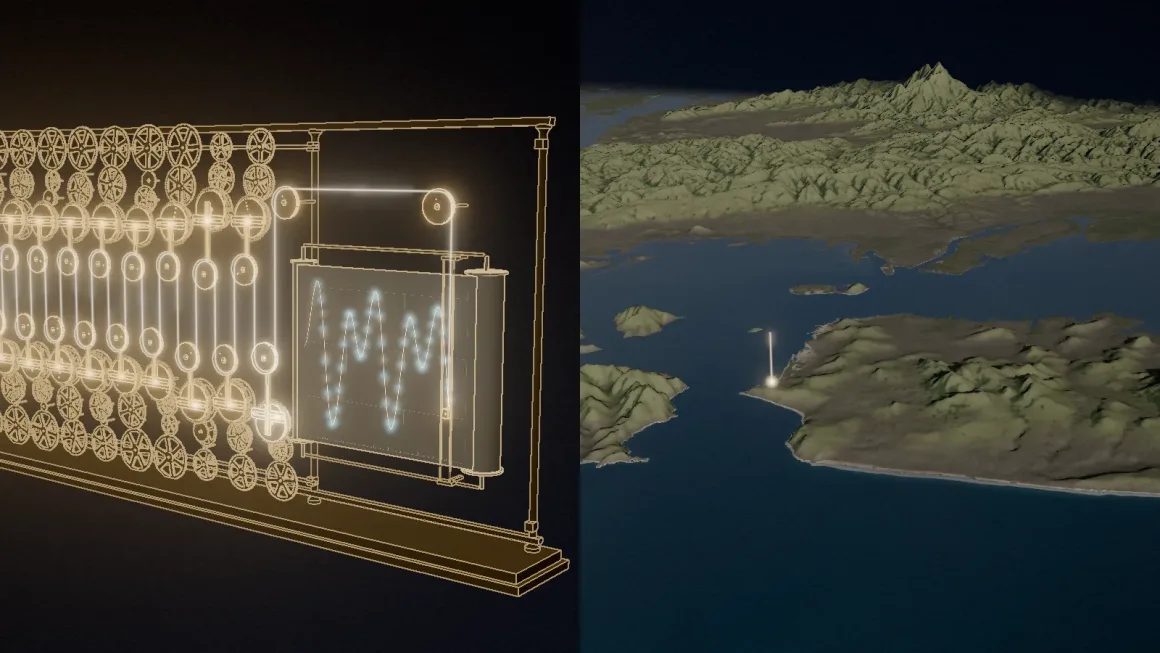
A brass tide-predicting machine drawn in glowing lines, its pulleys and the pen tracing a tide curve on the drum

Tide Machine

How the tides work, and how a brass machine learned to predict them. San Francisco Bay from real terrain and bathymetry, water driven by NOAA's harmonic constants, Kelvin's 1872 predictor and the 1912 Old Brass Brains, and a finale that predicts the tide on any coast on Earth.

Stack Astro, TypeScript, three.js on WebGPU with WebGL2 fallback, NOAA CO-OPS and EOT20 data, Cloudflare

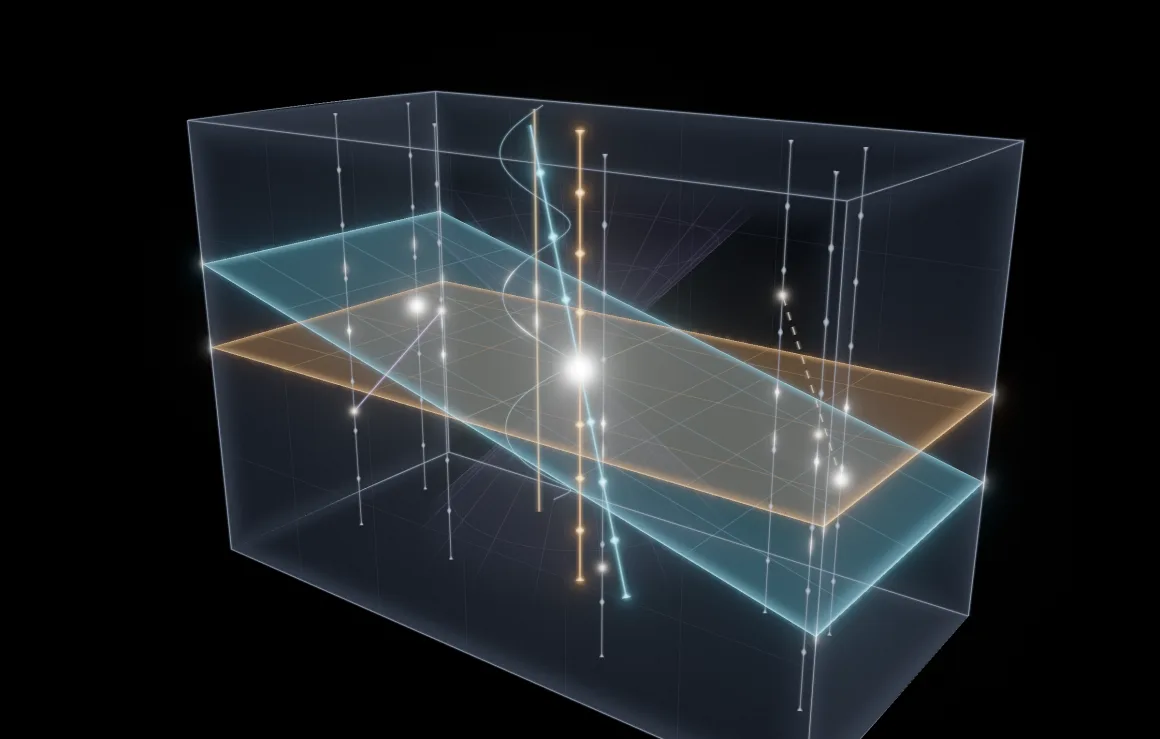
A glass block of spacetime with a flat amber now-slice and a tilted cyan one crossing through the point where two observers meet

Block Universe

Scroll and the argument builds, from time the way it feels to the claim that past, present and future all exist. Two observers slice one block of spacetime, every tilt is computed from tested relativity, and every stage says what kind of claim it is making.

Stack Astro, TypeScript, three.js on WebGPU with WebGL2 fallback, a tested relativity module, Cloudflare

Filaments of pale particles crossing a dark blue field, with teal supernova shells and a few bright new stars along them

Cosmic History

Scroll and the universe goes by, from a fraction of a second after the beginning to today, with the Planck 2018 cosmology running underneath and every stage saying how much to trust what you are looking at.

Stack Astro, TypeScript, three.js on WebGPU with WebGL2 fallback, TSL shaders, Cloudflare

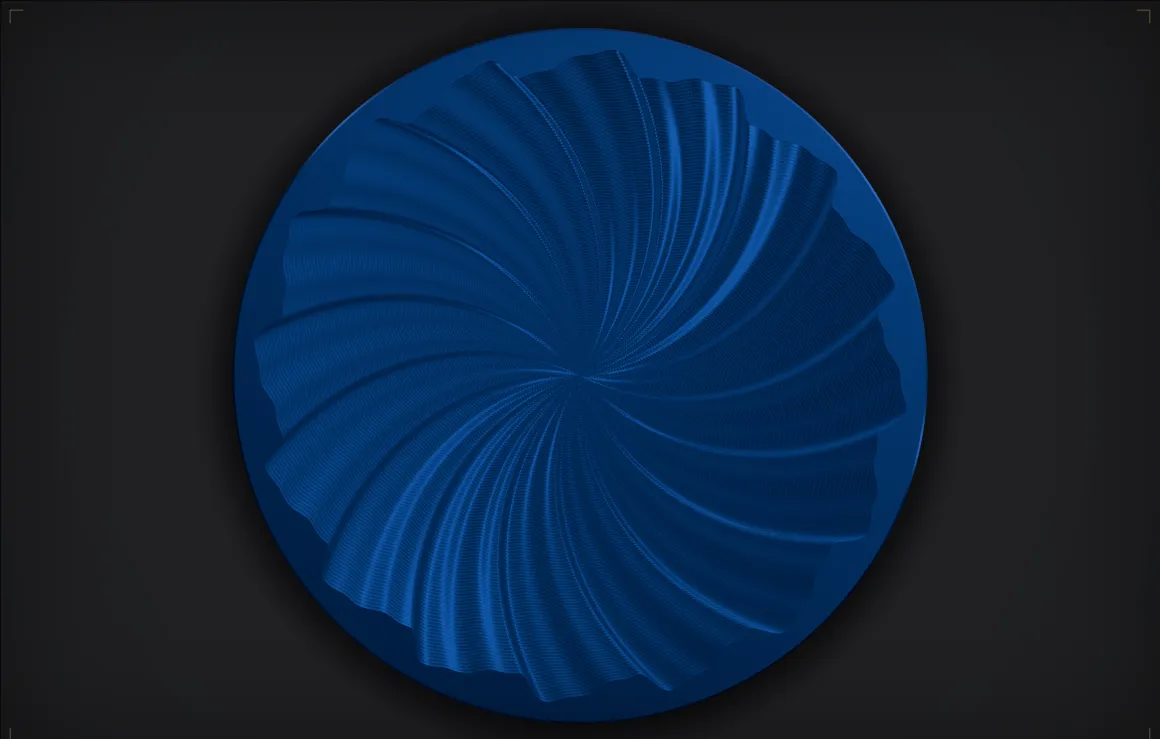
A blued steel plate engraved with a twelve-lobe flame pattern, the grooves catching light from the upper left

Rose Engine

A guilloché lathe in your browser. Stack the rosettes, set the slide rest and watch a 3D rose engine cut the plate in ink or engraved metal, then export it to a pen plotter, an engraver or a link.

Stack TypeScript, Vite, three.js, WebGL2 and GLSL, Tailwind

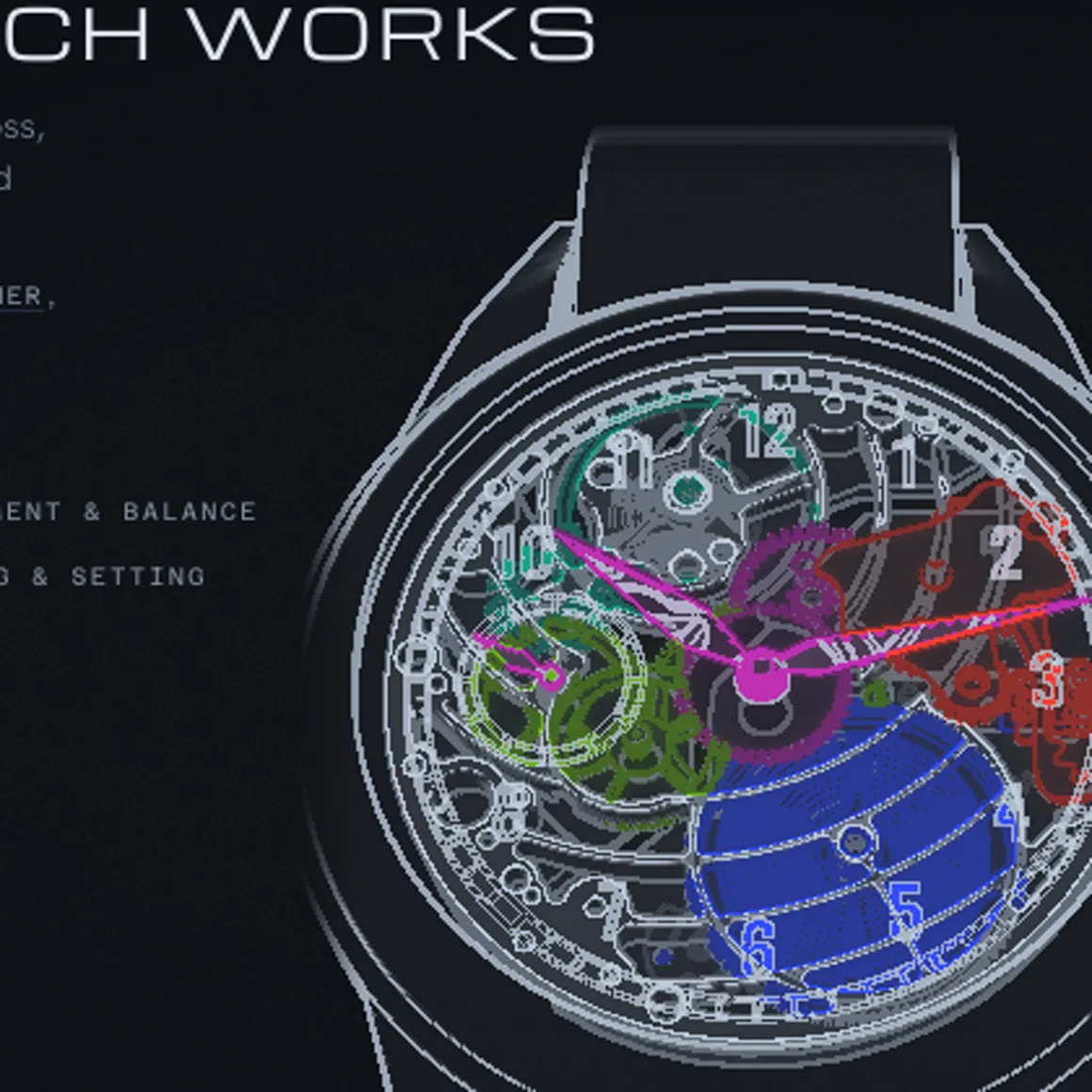
A watch movement seen from the dial side with each part coloured by its job: the barrel in blue, the gear train in green, the escapement in red

How a watch works

A hand-wound Swiss watch movement, drawn from a CAD model and running in your browser. Scroll to take it apart, watch the gears turn at the real ratios, then pick it up and turn it yourself.

Stack Astro, TypeScript, three.js, GSAP ScrollTrigger, glTF tooling

Something in your business is hard to picture?

Send it to me and I will tell you what a page that shows it would take.